
 Posts
Posts


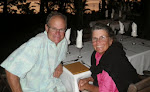


What an adventure! Can't wait to share it! We are docked in Alameda at Svensons and will post more info with photos shortly. Thanks everyone for the comments and emails.
Best,
Karen and Jim
Friday, June 7, 2013


Wednesday, June 5, 2013
New Zealand to San Francisco, Day 16-19
Day 16 Sunday, June 2, 2013
1025 Position: Latitude 24 00.6 N, Longitude 126 27.5 W
Speed 15.7, Course 049,
Barometer 1012, Weather: Overcast, big swell
Total miles run: 4517
Our longitude this morning is even with Nootka Sound on the west coast of Vancouver Island! The seas are much bigger today—at least 3-4 meters—and the ship sways noticeably, especially at the top of this inverse pendulum, the superstructure where our cabins are. It's also cloudy and cool. There has been a weather system off San Francisco with winds in the 35-knot range, according to the weather forecast. What we're seeing here, 690 miles off Ensenada, Mexico, is probably swell that's been traveling down from the north.
We're plotting our course each day on the same chart we used for our first crossing. How straight and fast it is compared to that course we sailed a little over a year ago! The differences are huge in modes of travel; in our first crossing, starting in March 2012, we zigzagged under sail across the Pacific according to the big wind belts of the Northeast and Southeast Trades. We sat becalmed for days, and crawled through doldrums. Though we made great time in the first two weeks, we averaged only two knots of speed in our last three weeks, and called 50 miles a good day's run. Sometimes we went only ten miles in 24 hours. Once we went 16 miles backwards on an adverse current. The sea tossed and rolled us at will.
In this crossing, we are on an immense behemoth of a ship that can largely (but not completely) ignore the wind belts, and we're passengers rather than participants. We have 340-mile days. The sleep is plentiful, and the navigation (for us) is voluntary. Although it feels necessary for us to know exactly where we are on the planet so we can track our voyage, the two crossings can be compared only superficially. In the first, we crossed the Pacific under sail, in a little bobbing cork of a boat. In the second, we are riding across the Pacific under power, on a schedule in which our arrival times are coordinated exactly to the hour. We feel the rumble of the great propeller turning, and when seas crash into the bow, we feel it shrug them off as the ship shudders.
Both modes are equally valid, though some crew think what we did on our little Sockdolager was "dangerous." We point out in turn, that when you follow the wind belts and seasons to stay out of certain areas during tropical revolving storm season, or stay out of higher latitudes in winter, that it is perhaps not so dangerous as keeping to a schedule that puts you in those iffy areas in the wrong season.
This is much the same weather as we had leaving Mexico, only better. We recall lots of rain and 30+ knot winds and 3-4 meter seas. We recall endless hard rolling and wet sailing, but never once did we feel that the boat couldn't take it. And although we got tired and frustrated, we're glad we did it.
After dinner last night I (K) taught Oleksandr, the Second Officer, how to tie a turk's head mat using the golden cord we were given by the First Officer to make Neptune's epaulets. He had requested a lesson, and was a fast learner.
Afternoon: Seas are getting bigger. 4 meter waves are common, with some higher. Lots of ship shuddering and a surprising amount of pitching at the bow. Big crashes of foam hurtle off the sides as the bow comes down, but they still aren't big enough to sweep over the bow.
Day 17 Monday, June 3, 2013
1025 Position: Latitude 28 34.7 N, Longitude 121 24.2 W
Speed 18, Course 047,
Barometer 1011, Weather: Overcast, cool
Total miles run: 5234
Yesterday evening we 3 passengers enjoyed pre-dinner cocktails in the Captain's cabin, along with some sparkling conversation. We were having such a good time and laughing so much that we almost missed dinner! Later after dinner, Jim and I walked up to the bow to watch and film the foaming maelstrom created by the ship's passage through the seas.
Seas are much improved this morning, and by 1300 we are doing 16 knots in relative calm of a well-spaced 2-meter swell. I can feel Mexico on the horizon, and hope we'll be able to go ashore in search of tacos and to fracture some more Spanish. This morning we saw our first ship, off the starboard bow, headed south, probably for the Panama Canal. We plan to post photos of this voyage as soon as we can after arriving in Oakland.
We will be in Bahia Ensenada around daybreak tomorrow to meet the pilot, tied up at the docks by 0730, and underway again by 1300, for San Francisco Bay. The ship will quickly unload and load some cargo.
Arrival in the pilot area outside the Golden Gate Bridge is scheduled for Thursday morning around 0515, and Jim and I wouldn't miss it for the world. Being high up on the ship's bridge as we go under the Golden Gate Bridge will be a thrill.
Day 18 Tuesday, June 4, 2013
0730 to 1200 Position: Ensenada, Mexico
Weather: Cool, cloudy
What a treat to awaken at 0515 to see the lights of land after 18 days at sea! The dry brown mountains of Ensenada Mexico welcomed us as the dawn revealed their contours, and the ship slowed down to receive the two pilots, who guided us through the narrow channel to the harbor, where our two tugs waited.
Customs boarded and cleared us by 0800 (I recognized the Banjercito lady from when we first cleared in November 2011,) and, because the time in port was compressed to an earlier departure than previously scheduled, we had two and a half hours to roam the town. After stocking up at the Mercado with our favorite Mexican foods, we wandered around looking at all the closed shops, until we came to the marina at Baja Naval. We looked for any cruising boats we might know, but saw none. It must be a slow time. We had asked the First, Second and Third Officers if they wanted anything from ashore (no crew were able to get ashore due to the short time in port) and all three asked for Mexican-themed refrigerator magnets for their wives, who evidently collect them. After a short search we found some decent ones. It's nice to know that these three souvenirs will be enjoyed on refrigerators in the Ukraine and Russia.
A fine breakfast of tacos and burritos at a friendly local cantina, and soon it was time to get back to the ship. We met Barbara in town at a prearranged time, and piled into a taxi, which dropped us at the Port's main gate. Our identities were verified and we piled into a van, which dropped us at a second gate, where our identities were again verified. A golf cart arrived, and we piled in like a football team stuffing a phone booth, which caused much merriment among the work crews we passed. A pleasant chat with a serene Mexican security guard at the gangway who said, "God bless you!" and we re-boarded the ship. We love Mexico and its people. The Hugo Schulte got underway shortly after noon, and we are now at sea again, steaming north toward San Francisco Bay.
This evening we invited the Captain and Chief Engineer to our cabin for some real Mexican tortilla chips, salsa and dark beer. If they couldn't get ashore, we could at least bring a bit of Old Mexico back to them. One more full day at sea, and we will arrive at the pilot station off San Francisco Bay around 0400 Thursday morning. The time has been moved up, so we may be going under the Golden Gate Bridge in early morning darkness.
Day 19 Wednesday, June 5, 2013
0830 Position: Latitude 33 56.6 N, Longitude 120 59.6 W
Speed 20.5, Course 328,
Barometer 1014, Weather: Overcast, cool
Total miles run: 5829
It's our last full day at sea for now; we arrive in Oakland tomorrow morning. We're finally in US waters, off the Southern California coast. It's the first time in 18 months, and it feels good to be nearing our home. I (K) am reminded, after a long stretch of open blue water with its endless opportunities for reading, reflection, contemplation and quiet strolls, of how normal it has come to feel being out here at sea. I'm also reminded, after yesterday's pleasant 2 ½ hour jaunt into Ensenada, of how much psychic adjustment is needed to rearrange oneself to the jarring contrasts of land. But we are land creatures, no matter how much we admire the whale. We have roots in our community, no matter how much we admire the migratory bird. And we are happy about our decision to come home, no matter how much we've enjoyed the adventure. There will be more adventures to come; the maze of islands and inlets from Puget Sound to Alaska awaits us, as do salmon, crabs and halibut!
We think often about our friends who've continued on, to Fiji, Australia, and back to French Polynesia, and we're happy for them to be sailing in warm tropical seas. I'm sure that in the coming journey north, when the wind howls and it's foggy and cold, that there will be times when we miss the tropics, especially our favorite places: Fakarava; Bora Bora; Aitutaki. And New Zealand. And Mexico's Sea of Cortez. What fabulous places. But homecomings are sweet because everything becomes new again. As G.K. Chesterton once said, "The whole object of travel is not to set foot on foreign land; it is at last to set foot on one's own country as a foreign land."
We look forward to reunions with friends in the San Francisco Bay area, and then to setting off again, to sail north. To round Cape Mendocino, to work our way up the California, Oregon and Washington coasts while seeing what we missed on the way down. To round the corner at Neah Bay, and sail past Seal Rock and the Pillars, down the Strait of Juan de Fuca, with Canada's Vancouver Island in sight to our north. To sight the Olympic Mountains at last, and then the snow-capped volcanoes of Mt Baker and Mt Adams, then Discovery Bay, and round Point Wilson to see Port Townsend. And later, to continue our peripatetic perambulation under sail, being reminded of that wonderful saying by Anatole France: Wandering reestablishes the original harmony which once existed between man and the universe.
We will write more (and respond to email) after we arrive and have the boat safely unloaded and at the dock.
1025 Position: Latitude 24 00.6 N, Longitude 126 27.5 W
Speed 15.7, Course 049,
Barometer 1012, Weather: Overcast, big swell
Total miles run: 4517
Our longitude this morning is even with Nootka Sound on the west coast of Vancouver Island! The seas are much bigger today—at least 3-4 meters—and the ship sways noticeably, especially at the top of this inverse pendulum, the superstructure where our cabins are. It's also cloudy and cool. There has been a weather system off San Francisco with winds in the 35-knot range, according to the weather forecast. What we're seeing here, 690 miles off Ensenada, Mexico, is probably swell that's been traveling down from the north.
We're plotting our course each day on the same chart we used for our first crossing. How straight and fast it is compared to that course we sailed a little over a year ago! The differences are huge in modes of travel; in our first crossing, starting in March 2012, we zigzagged under sail across the Pacific according to the big wind belts of the Northeast and Southeast Trades. We sat becalmed for days, and crawled through doldrums. Though we made great time in the first two weeks, we averaged only two knots of speed in our last three weeks, and called 50 miles a good day's run. Sometimes we went only ten miles in 24 hours. Once we went 16 miles backwards on an adverse current. The sea tossed and rolled us at will.
In this crossing, we are on an immense behemoth of a ship that can largely (but not completely) ignore the wind belts, and we're passengers rather than participants. We have 340-mile days. The sleep is plentiful, and the navigation (for us) is voluntary. Although it feels necessary for us to know exactly where we are on the planet so we can track our voyage, the two crossings can be compared only superficially. In the first, we crossed the Pacific under sail, in a little bobbing cork of a boat. In the second, we are riding across the Pacific under power, on a schedule in which our arrival times are coordinated exactly to the hour. We feel the rumble of the great propeller turning, and when seas crash into the bow, we feel it shrug them off as the ship shudders.
Both modes are equally valid, though some crew think what we did on our little Sockdolager was "dangerous." We point out in turn, that when you follow the wind belts and seasons to stay out of certain areas during tropical revolving storm season, or stay out of higher latitudes in winter, that it is perhaps not so dangerous as keeping to a schedule that puts you in those iffy areas in the wrong season.
This is much the same weather as we had leaving Mexico, only better. We recall lots of rain and 30+ knot winds and 3-4 meter seas. We recall endless hard rolling and wet sailing, but never once did we feel that the boat couldn't take it. And although we got tired and frustrated, we're glad we did it.
After dinner last night I (K) taught Oleksandr, the Second Officer, how to tie a turk's head mat using the golden cord we were given by the First Officer to make Neptune's epaulets. He had requested a lesson, and was a fast learner.
Afternoon: Seas are getting bigger. 4 meter waves are common, with some higher. Lots of ship shuddering and a surprising amount of pitching at the bow. Big crashes of foam hurtle off the sides as the bow comes down, but they still aren't big enough to sweep over the bow.
Day 17 Monday, June 3, 2013
1025 Position: Latitude 28 34.7 N, Longitude 121 24.2 W
Speed 18, Course 047,
Barometer 1011, Weather: Overcast, cool
Total miles run: 5234
Yesterday evening we 3 passengers enjoyed pre-dinner cocktails in the Captain's cabin, along with some sparkling conversation. We were having such a good time and laughing so much that we almost missed dinner! Later after dinner, Jim and I walked up to the bow to watch and film the foaming maelstrom created by the ship's passage through the seas.
Seas are much improved this morning, and by 1300 we are doing 16 knots in relative calm of a well-spaced 2-meter swell. I can feel Mexico on the horizon, and hope we'll be able to go ashore in search of tacos and to fracture some more Spanish. This morning we saw our first ship, off the starboard bow, headed south, probably for the Panama Canal. We plan to post photos of this voyage as soon as we can after arriving in Oakland.
We will be in Bahia Ensenada around daybreak tomorrow to meet the pilot, tied up at the docks by 0730, and underway again by 1300, for San Francisco Bay. The ship will quickly unload and load some cargo.
Arrival in the pilot area outside the Golden Gate Bridge is scheduled for Thursday morning around 0515, and Jim and I wouldn't miss it for the world. Being high up on the ship's bridge as we go under the Golden Gate Bridge will be a thrill.
Day 18 Tuesday, June 4, 2013
0730 to 1200 Position: Ensenada, Mexico
Weather: Cool, cloudy
What a treat to awaken at 0515 to see the lights of land after 18 days at sea! The dry brown mountains of Ensenada Mexico welcomed us as the dawn revealed their contours, and the ship slowed down to receive the two pilots, who guided us through the narrow channel to the harbor, where our two tugs waited.
Customs boarded and cleared us by 0800 (I recognized the Banjercito lady from when we first cleared in November 2011,) and, because the time in port was compressed to an earlier departure than previously scheduled, we had two and a half hours to roam the town. After stocking up at the Mercado with our favorite Mexican foods, we wandered around looking at all the closed shops, until we came to the marina at Baja Naval. We looked for any cruising boats we might know, but saw none. It must be a slow time. We had asked the First, Second and Third Officers if they wanted anything from ashore (no crew were able to get ashore due to the short time in port) and all three asked for Mexican-themed refrigerator magnets for their wives, who evidently collect them. After a short search we found some decent ones. It's nice to know that these three souvenirs will be enjoyed on refrigerators in the Ukraine and Russia.
A fine breakfast of tacos and burritos at a friendly local cantina, and soon it was time to get back to the ship. We met Barbara in town at a prearranged time, and piled into a taxi, which dropped us at the Port's main gate. Our identities were verified and we piled into a van, which dropped us at a second gate, where our identities were again verified. A golf cart arrived, and we piled in like a football team stuffing a phone booth, which caused much merriment among the work crews we passed. A pleasant chat with a serene Mexican security guard at the gangway who said, "God bless you!" and we re-boarded the ship. We love Mexico and its people. The Hugo Schulte got underway shortly after noon, and we are now at sea again, steaming north toward San Francisco Bay.
This evening we invited the Captain and Chief Engineer to our cabin for some real Mexican tortilla chips, salsa and dark beer. If they couldn't get ashore, we could at least bring a bit of Old Mexico back to them. One more full day at sea, and we will arrive at the pilot station off San Francisco Bay around 0400 Thursday morning. The time has been moved up, so we may be going under the Golden Gate Bridge in early morning darkness.
Day 19 Wednesday, June 5, 2013
0830 Position: Latitude 33 56.6 N, Longitude 120 59.6 W
Speed 20.5, Course 328,
Barometer 1014, Weather: Overcast, cool
Total miles run: 5829
It's our last full day at sea for now; we arrive in Oakland tomorrow morning. We're finally in US waters, off the Southern California coast. It's the first time in 18 months, and it feels good to be nearing our home. I (K) am reminded, after a long stretch of open blue water with its endless opportunities for reading, reflection, contemplation and quiet strolls, of how normal it has come to feel being out here at sea. I'm also reminded, after yesterday's pleasant 2 ½ hour jaunt into Ensenada, of how much psychic adjustment is needed to rearrange oneself to the jarring contrasts of land. But we are land creatures, no matter how much we admire the whale. We have roots in our community, no matter how much we admire the migratory bird. And we are happy about our decision to come home, no matter how much we've enjoyed the adventure. There will be more adventures to come; the maze of islands and inlets from Puget Sound to Alaska awaits us, as do salmon, crabs and halibut!
We think often about our friends who've continued on, to Fiji, Australia, and back to French Polynesia, and we're happy for them to be sailing in warm tropical seas. I'm sure that in the coming journey north, when the wind howls and it's foggy and cold, that there will be times when we miss the tropics, especially our favorite places: Fakarava; Bora Bora; Aitutaki. And New Zealand. And Mexico's Sea of Cortez. What fabulous places. But homecomings are sweet because everything becomes new again. As G.K. Chesterton once said, "The whole object of travel is not to set foot on foreign land; it is at last to set foot on one's own country as a foreign land."
We look forward to reunions with friends in the San Francisco Bay area, and then to setting off again, to sail north. To round Cape Mendocino, to work our way up the California, Oregon and Washington coasts while seeing what we missed on the way down. To round the corner at Neah Bay, and sail past Seal Rock and the Pillars, down the Strait of Juan de Fuca, with Canada's Vancouver Island in sight to our north. To sight the Olympic Mountains at last, and then the snow-capped volcanoes of Mt Baker and Mt Adams, then Discovery Bay, and round Point Wilson to see Port Townsend. And later, to continue our peripatetic perambulation under sail, being reminded of that wonderful saying by Anatole France: Wandering reestablishes the original harmony which once existed between man and the universe.
We will write more (and respond to email) after we arrive and have the boat safely unloaded and at the dock.
Sunday, June 2, 2013
New Zealand to San Francisco, Day 13-15
Day 13Thursday, May 30, 2013
1010 Position: Latitude 11 40.4 N, Longitude 138 00.9 W
Speed 13.4, Course 048,
Barometer 1010, Weather: Cloudy, hazy sunshine, warm
Total miles run: 3850
A squally afternoon and evening yesterday with lots of headwind causing bigger swells and whitecaps. This morning is brighter but still hazy. It was too cloudy at the horizon to see the constellation Southern Cross last night; only a few stars high up were visible. It was noticeably cooler today, though still warm.
We have learned so much about how container ships operate; it's been fascinating. When we arrive in Oakland, a Planning Agent will board immediately, to discuss the offloading of cargo. Since we are owners of one of the cargo aboard, we will find out then what time they plan to fetch Sockdolager from her hold. We are hoping to finalize the arrangements soon, but the plan is that our friends and fellow Dana 24 owners Chris Humann (correct spelling, no relation) and Laurence Boag will meet us with Laurence's boat and deliver us to Sockdolager as she is lowered into the water. They will also bring fuel as we had to run the tank very close to empty in preparation for shipping. Both have been working on the details of getting all the paperwork and arranging done, and we are very grateful to them.
Passengers on container ships are responsible for finding their own entertainment. Being cruising sailors, we have had no difficulty with that, and in fact still have things we haven't done yet. It is helpful that we have a dvd player in our room and have been able to watch some movies as well as the HBO series Deadwood (for the second time). We've been going for walks around the ship to photograph all sorts of cool shapes, sizes and colors of mechanical equipment, pulleys, wheels, winches and hatches, and it's amazing how artsy and fun some of the photos are! I call it "Industrial Chic."
Passengers are also responsible for their own time on land, the main challenge being to be back aboard ship before departure time. These ships cannot wait for passengers who are late. Since we have only a few—8 or less—hours in Mexico next week, we plan to be careful about the time, if we are allowed ashore by Mexican customs and immigration. There is a lot of paperwork in Mexico, we have to expect that its volume and time investment may preclude going ashore. But we can almost hear the plaintive call of the wild tacos… Oh, to have Margaritas with Deb and Don on Buena Vista again! We originally met them in Mexico and became friends as we crossed paths all the way across the Pacific to New Zealand. They are living and working in Australia now.
Spent a pleasant evening visiting with both Captain Zoran and Chief Engineer Lawrence in their cabins, and talking about history, politics, customs, similarities and differences between the US and Croatia, and the US and Romania.
The seas are up; probably 3 meters, and the wind is 20+ knots. Classic trade wind conditions. The sea has also changed color, from that bottomless clear tropical greenish-blue to an opaque sea-blue.
Day 14Friday, May 31, 2013
1020 Position: Latitude 15 51.2 N, Longitude 134 20.8 W
Speed 12.5, Course 042,
Barometer 1012, Weather: Squally, sunny blue sky between cloud banks; warm. Later: Sunny, windy, partly cloudy.
Total miles run: 4181 Same number of miles to go to Ensenada as to Oakland: 1316
We moved the clocks ahead one hour last night. We are now only an hour or two off the Pacific Time Zone. It's squally this morning, and cooler. Rain beats on our portholes, and our response is to yawn and make coffee. Jeez, we hope our cruising friends at sea aren't reading this, we don't want to rub it in! The email we have aboard ship does not let us access our regular gmail or winlink accounts, so if anyone has sent us a note we will read it when we get to Oakland, on June 6.
By late morning we are "beating" into a vigorous trade wind with lots of whitecaps, and it shows in our speed.
The cook, Marlon, has done an outstanding job so far, and the food is hearty and "home-cooked." Because the officers are used to European-style cuisine, lunch is never sandwiches or light fare; it's a full meal, with salad, soup, meat or fish with vegetables and potatoes, pasta or rice, sometimes with dessert. Dinner is also a full meal but rarely with dessert. The quality of the meals is even more amazing having recently found out that the budget for food is $7.50 per person per day total. You must be at each meal at the correct time or you will miss it, though snacks are available from the galley fridge. Since the main meal of the day is lunch, and since breakfast is also a cooked affair unless you opt for cereal, we tend to skip breakfast and have just the two meals. We make coffee in our cabin; I have a granola bar and Jim has his beloved Pop-tarts [note from Jim: the Pop-tarts are now gone and I am reduced to Woolworths oven baked fruit bars, a reasonable substitute, but not really coming close to the fine flavor and texture of a P-T, fresh from its foil wrapper]. I prefer to have smaller meals more spread out through the day, but we are thriving as long as we exercise, which is easy on a ship with so many stairs.
Yesterday the soup was a deep red, and RJ the Steward said, "It's Borscht, the famous Russian soup." It was delicious, though when the Russian officers tried it they said it was Filipino borscht and very different from Russian borscht. Filipino borscht? Who knew?
Day 15Saturday, June 1, 2013
1020 Position: Latitude 20 01.8 N, Longitude 134 27.5 W
Speed 14.8, Course 041,
Barometer 1013, Weather: Cloudy, cooler (it's 70 degrees) cooler, occasional showers
Total miles run: 4517
The seas are more spaced out and less wind-whipped this morning, but they aren't getting smaller. Under this cloud deck the ocean is shades of pewter and slate-blue. The Captain said the water temperature is down to 70 degrees, from 86 a few days ago.
"It is interesting that now we view distances in latitudes instead of miles, like, we're only 14 degrees from home," I said, as we crossed the 24th parallel.
Yesterday at dinner Barbara had us all in hysterics with her story of being in the swimming pool enjoying a nice quiet afternoon swim, and slowly realizing the water was disappearing: the pool was being drained. She ended up standing in ankle-deep water wondering, "What the hell just happened?" She told the amused officer's mess, "You wouldn't believe how fast that pool can drain!" A couple hours later she looked in and it was full again. The water is not filtered like a regular pool, so it has to be changed every other day.
The fire alarms were tested today, and we can report that they work extremely well.
Pizza night tonight!
1010 Position: Latitude 11 40.4 N, Longitude 138 00.9 W
Speed 13.4, Course 048,
Barometer 1010, Weather: Cloudy, hazy sunshine, warm
Total miles run: 3850
A squally afternoon and evening yesterday with lots of headwind causing bigger swells and whitecaps. This morning is brighter but still hazy. It was too cloudy at the horizon to see the constellation Southern Cross last night; only a few stars high up were visible. It was noticeably cooler today, though still warm.
We have learned so much about how container ships operate; it's been fascinating. When we arrive in Oakland, a Planning Agent will board immediately, to discuss the offloading of cargo. Since we are owners of one of the cargo aboard, we will find out then what time they plan to fetch Sockdolager from her hold. We are hoping to finalize the arrangements soon, but the plan is that our friends and fellow Dana 24 owners Chris Humann (correct spelling, no relation) and Laurence Boag will meet us with Laurence's boat and deliver us to Sockdolager as she is lowered into the water. They will also bring fuel as we had to run the tank very close to empty in preparation for shipping. Both have been working on the details of getting all the paperwork and arranging done, and we are very grateful to them.
Passengers on container ships are responsible for finding their own entertainment. Being cruising sailors, we have had no difficulty with that, and in fact still have things we haven't done yet. It is helpful that we have a dvd player in our room and have been able to watch some movies as well as the HBO series Deadwood (for the second time). We've been going for walks around the ship to photograph all sorts of cool shapes, sizes and colors of mechanical equipment, pulleys, wheels, winches and hatches, and it's amazing how artsy and fun some of the photos are! I call it "Industrial Chic."
Passengers are also responsible for their own time on land, the main challenge being to be back aboard ship before departure time. These ships cannot wait for passengers who are late. Since we have only a few—8 or less—hours in Mexico next week, we plan to be careful about the time, if we are allowed ashore by Mexican customs and immigration. There is a lot of paperwork in Mexico, we have to expect that its volume and time investment may preclude going ashore. But we can almost hear the plaintive call of the wild tacos… Oh, to have Margaritas with Deb and Don on Buena Vista again! We originally met them in Mexico and became friends as we crossed paths all the way across the Pacific to New Zealand. They are living and working in Australia now.
Spent a pleasant evening visiting with both Captain Zoran and Chief Engineer Lawrence in their cabins, and talking about history, politics, customs, similarities and differences between the US and Croatia, and the US and Romania.
The seas are up; probably 3 meters, and the wind is 20+ knots. Classic trade wind conditions. The sea has also changed color, from that bottomless clear tropical greenish-blue to an opaque sea-blue.
Day 14Friday, May 31, 2013
1020 Position: Latitude 15 51.2 N, Longitude 134 20.8 W
Speed 12.5, Course 042,
Barometer 1012, Weather: Squally, sunny blue sky between cloud banks; warm. Later: Sunny, windy, partly cloudy.
Total miles run: 4181 Same number of miles to go to Ensenada as to Oakland: 1316
We moved the clocks ahead one hour last night. We are now only an hour or two off the Pacific Time Zone. It's squally this morning, and cooler. Rain beats on our portholes, and our response is to yawn and make coffee. Jeez, we hope our cruising friends at sea aren't reading this, we don't want to rub it in! The email we have aboard ship does not let us access our regular gmail or winlink accounts, so if anyone has sent us a note we will read it when we get to Oakland, on June 6.
By late morning we are "beating" into a vigorous trade wind with lots of whitecaps, and it shows in our speed.
The cook, Marlon, has done an outstanding job so far, and the food is hearty and "home-cooked." Because the officers are used to European-style cuisine, lunch is never sandwiches or light fare; it's a full meal, with salad, soup, meat or fish with vegetables and potatoes, pasta or rice, sometimes with dessert. Dinner is also a full meal but rarely with dessert. The quality of the meals is even more amazing having recently found out that the budget for food is $7.50 per person per day total. You must be at each meal at the correct time or you will miss it, though snacks are available from the galley fridge. Since the main meal of the day is lunch, and since breakfast is also a cooked affair unless you opt for cereal, we tend to skip breakfast and have just the two meals. We make coffee in our cabin; I have a granola bar and Jim has his beloved Pop-tarts [note from Jim: the Pop-tarts are now gone and I am reduced to Woolworths oven baked fruit bars, a reasonable substitute, but not really coming close to the fine flavor and texture of a P-T, fresh from its foil wrapper]. I prefer to have smaller meals more spread out through the day, but we are thriving as long as we exercise, which is easy on a ship with so many stairs.
Yesterday the soup was a deep red, and RJ the Steward said, "It's Borscht, the famous Russian soup." It was delicious, though when the Russian officers tried it they said it was Filipino borscht and very different from Russian borscht. Filipino borscht? Who knew?
Day 15Saturday, June 1, 2013
1020 Position: Latitude 20 01.8 N, Longitude 134 27.5 W
Speed 14.8, Course 041,
Barometer 1013, Weather: Cloudy, cooler (it's 70 degrees) cooler, occasional showers
Total miles run: 4517
The seas are more spaced out and less wind-whipped this morning, but they aren't getting smaller. Under this cloud deck the ocean is shades of pewter and slate-blue. The Captain said the water temperature is down to 70 degrees, from 86 a few days ago.
"It is interesting that now we view distances in latitudes instead of miles, like, we're only 14 degrees from home," I said, as we crossed the 24th parallel.
Yesterday at dinner Barbara had us all in hysterics with her story of being in the swimming pool enjoying a nice quiet afternoon swim, and slowly realizing the water was disappearing: the pool was being drained. She ended up standing in ankle-deep water wondering, "What the hell just happened?" She told the amused officer's mess, "You wouldn't believe how fast that pool can drain!" A couple hours later she looked in and it was full again. The water is not filtered like a regular pool, so it has to be changed every other day.
The fire alarms were tested today, and we can report that they work extremely well.
Pizza night tonight!
Wednesday, May 29, 2013
New Zealand to San Francisco, Day 10-12
Day 10 Monday, May 27, 2013
1020 Position: Latitude 01 32.4 S, Longitude 148 56.2 W
Speed 14.6, Course 036,
Barometer 1010, Weather: Sunny, partly cloudy, hot
Total miles run: 2819.3
At 10:30 am, we've got 120 miles to go to the Equator! We're also halfway to our first stop in Ensenada, Mexico. It's another classic equatorial day: hot, sunny, almost windless, and the pale blue sky is dotted with cumulus. Flying fish are launching themselves off our bow wave; the sea is turquoise where the sun hits it and blue-green under clouds.
As mentioned before, the container ship that we and Sockdolager are aboard, the M/V Hugo Schulte, is going more slowly than it normally would, in order to save fuel. Chief Engineer Lawrence told us that at normal speeds (22 knots) this voyage would take ten days. But who would want to rush? After all the sailing we've done, being mere passengers with no duties is both weird and pleasureable.
Later, on the Equator: the crossing ceremony was a complete surprise to its intended "victim," and everyone had a good time. Jim and I bought a few bottles of wine for the celebration, and RJ the steward made a huge delicious lemon cake. We toasted the occasion with the crew.
Jim looked magnificent in his Neptune costume complete with tinfoil crown and epaulets, and I felt elegant as Aphrodite in my cape and knotted turk's head jewelry. The entire Russian crew wanted their photos taken with Neptune and Aphrodite, and we obliged. The Captain presented Barbara with an Official Diploma recognizing her ascension from Polliwog to Shellback, Neptune gave a stirring speech in his best stentorian tones, a poem was read, a bit of saltwater was sprinkled over Barbara, and immediately after dinner we all rushed six stories up from the mess hall to the wheelhouse, to witness the actual crossing of the Equator.
"Wait'll you see it," I said, "There's an actual, visible line in the water!"
"There is?" said Barbara.
"Oh yes," said Lawrence. "In fact, if you want, we can dip down with a bucket and take a little piece of the Equator for you. It's so big, nobody'll miss it."
By then Barbara had caught on, but she was a good sport. "I'd like to see what Customs would do with that," she commented drily.
Picture yourself going through Customs, we all pondered aloud. 'What's in the jar?' they'd ask. 'Oh, that's just a piece of the Equator,' we'd say. 'Lady, please step out of the line,' they'd say.
As we crossed the line the First Officer let loose with a big long blast on the ship's horn. Oh, I would love to sound the horn, I said to the Captain, you know, sort of a shave-and-a-haircut-two-bits signal. He replied that if I did that, the crew would be at their muster stations ready to abandon ship. Okay then, bad idea!
Here's the poem we wrote for the occasion:
Neptune's Excellent Equator Crossing Poem
I could not say anything greater
than, "You have just crossed the Equator."
The sea's my domain
And forever I'll reign
with my trident and charts by Mercator.
A Polliwog you are, no longa
Having crossed 'tween Hawaii and Tonga
It's Shellback, you daughter
Of open blue water
From now on you'll be wiser and stronga.
It was a totally excellent day.
Day 11 Tuesday, May 28, 2013
1100 Position: Latitude 02 56.4 N, Longitude 145 18.3 W
Speed 14, Course 046,
Barometer 1010.7, Weather: Sunny, partly cloudy, hot
Total miles run: 3167
Jim likes to stay up late and sleep in, and I'm more of an early bird. The other night he stayed up and watched a movie.
Me: Which one was it?
Jim: Oh, it was one I knew you wouldn't love. It's called 'Earth's Last Day.'
Me: Was it good?
Jim: It was really, really bad.
Me: Tell me about it!
He describes just the beginning, which involves a piece of dark matter falling to earth and going right through some guy's chest. It leaves a big smoking hole and then it burns through the earth and goes out the other side. The holed guy, still alive, is found by onlookers, and he gives them his last words—'Don't forget the circles.'
Me: Whoa. Intense. Yawn.
Jim: I concluded that it's highly doubtful that a guy missing his lungs and heart could speak.
Me: This is your medical training at work. Let me know when you have other deep conclusions like that.
Jim: Happy to help. I'm watching all the bad movies so you don't have to.
At lunch, both the Captain and the Chief Engineer were eager to know what we plan to celebrate next. We brainstormed a list of holidays that occur between now and next week, in the US, Croatia and Romania, but the list is pretty thin. Maybe we should declare International Cake and Ice Cream Day, with RJ as its patron saint.
Today, a tropicbird is following the ship, soaring and swooping overhead. It's bright white but otherwise did not match the description or picture of either the red-tailed or white-tailed species in my identification book; it has a yellowish beak but not the exact same wing markings as a yellow-tailed tropicbird, and its tail plume is yellowish-white.
I watched it for quite awhile. Tropicbirds are so lovely and graceful. The other birds we've seen since leaving NZ and colder waters were a couple of flocks of agile Phoenix petrels having good luck with their fishing. Later: We came upon a flock of tropicbirds; one was sitting in the water before rising and flapping away. I've never seen one land on the water before. Barbara reported that she'd seen a bird that matched the description of a Phoenix petrel, sitting atop the forward crane until it saw something, then diving for it and returning to its perch with a meal of fish. Other than these sightings, we've seen very little bird life. This far out to sea, there is less of it. But the Big Dipper is visible again!
Day 12 Wednesday, May 29, 2013
1315 Position: Latitude 07 58.7 N, Longitude 141 08.8 W
Speed 14.6, Course 039,
Barometer 1008, Weather: Cloudy, squalls, hot
Total miles run: 3559
Maybe it's psychological, but it feels and looks different in the northern hemisphere. Within half a day of crossing the Equator, the cloud cover began to increase until today it's mostly cloudy with occasional squalls. It's the Inter Tropical Convergence Zone again, and this time we get to sleep through every squall and stay warm and dry. The swell is now more markedly northeast, including those long ocean ground swells. Looks like we're near the Northeast Trades.
This has been an idyllic trip so far; the Captain said he's had an easy time of it, but when it gets rough (and it can get very rough because this ship goes year-round) he and the crew must steer around the storms and hang on. In our cabin the chairs have little chains for attaching to the floor, and everything else is attached to something so it doesn't come adrift. Late May is fairly benign in terms of hurricane frequency, but they are possible in the northern hemisphere. However, nothing worrisome shows up on the weather forecast.
Last night in an effort to get a last sighting of the Southern Cross, Jim went up to the bridge deck but stayed outside the wheelhouse, walking the perimeter. He walked past the AB (able-bodied seaman) on watch who was gazing out the wheelhouse window, and without meaning to, gave the poor fellow the fright of his life. Ghosts on ships are not a good thing. The tradition is to announce "on the bridge" whenever you arrive up there, and we will do that from now on.
Today we asked RJ to show us the ship's giant freezers and fridges, and they are indeed huge.
It's ice cream Wednesday! The Captain has instituted this new tradition in our honor, and also because he admits to a fondness for it, and also because there's plenty of it to last until we get to Oakland, hooray!
1020 Position: Latitude 01 32.4 S, Longitude 148 56.2 W
Speed 14.6, Course 036,
Barometer 1010, Weather: Sunny, partly cloudy, hot
Total miles run: 2819.3
At 10:30 am, we've got 120 miles to go to the Equator! We're also halfway to our first stop in Ensenada, Mexico. It's another classic equatorial day: hot, sunny, almost windless, and the pale blue sky is dotted with cumulus. Flying fish are launching themselves off our bow wave; the sea is turquoise where the sun hits it and blue-green under clouds.
As mentioned before, the container ship that we and Sockdolager are aboard, the M/V Hugo Schulte, is going more slowly than it normally would, in order to save fuel. Chief Engineer Lawrence told us that at normal speeds (22 knots) this voyage would take ten days. But who would want to rush? After all the sailing we've done, being mere passengers with no duties is both weird and pleasureable.
Later, on the Equator: the crossing ceremony was a complete surprise to its intended "victim," and everyone had a good time. Jim and I bought a few bottles of wine for the celebration, and RJ the steward made a huge delicious lemon cake. We toasted the occasion with the crew.
Jim looked magnificent in his Neptune costume complete with tinfoil crown and epaulets, and I felt elegant as Aphrodite in my cape and knotted turk's head jewelry. The entire Russian crew wanted their photos taken with Neptune and Aphrodite, and we obliged. The Captain presented Barbara with an Official Diploma recognizing her ascension from Polliwog to Shellback, Neptune gave a stirring speech in his best stentorian tones, a poem was read, a bit of saltwater was sprinkled over Barbara, and immediately after dinner we all rushed six stories up from the mess hall to the wheelhouse, to witness the actual crossing of the Equator.
"Wait'll you see it," I said, "There's an actual, visible line in the water!"
"There is?" said Barbara.
"Oh yes," said Lawrence. "In fact, if you want, we can dip down with a bucket and take a little piece of the Equator for you. It's so big, nobody'll miss it."
By then Barbara had caught on, but she was a good sport. "I'd like to see what Customs would do with that," she commented drily.
Picture yourself going through Customs, we all pondered aloud. 'What's in the jar?' they'd ask. 'Oh, that's just a piece of the Equator,' we'd say. 'Lady, please step out of the line,' they'd say.
As we crossed the line the First Officer let loose with a big long blast on the ship's horn. Oh, I would love to sound the horn, I said to the Captain, you know, sort of a shave-and-a-haircut-two-bits signal. He replied that if I did that, the crew would be at their muster stations ready to abandon ship. Okay then, bad idea!
Here's the poem we wrote for the occasion:
Neptune's Excellent Equator Crossing Poem
I could not say anything greater
than, "You have just crossed the Equator."
The sea's my domain
And forever I'll reign
with my trident and charts by Mercator.
A Polliwog you are, no longa
Having crossed 'tween Hawaii and Tonga
It's Shellback, you daughter
Of open blue water
From now on you'll be wiser and stronga.
It was a totally excellent day.
Day 11 Tuesday, May 28, 2013
1100 Position: Latitude 02 56.4 N, Longitude 145 18.3 W
Speed 14, Course 046,
Barometer 1010.7, Weather: Sunny, partly cloudy, hot
Total miles run: 3167
Jim likes to stay up late and sleep in, and I'm more of an early bird. The other night he stayed up and watched a movie.
Me: Which one was it?
Jim: Oh, it was one I knew you wouldn't love. It's called 'Earth's Last Day.'
Me: Was it good?
Jim: It was really, really bad.
Me: Tell me about it!
He describes just the beginning, which involves a piece of dark matter falling to earth and going right through some guy's chest. It leaves a big smoking hole and then it burns through the earth and goes out the other side. The holed guy, still alive, is found by onlookers, and he gives them his last words—'Don't forget the circles.'
Me: Whoa. Intense. Yawn.
Jim: I concluded that it's highly doubtful that a guy missing his lungs and heart could speak.
Me: This is your medical training at work. Let me know when you have other deep conclusions like that.
Jim: Happy to help. I'm watching all the bad movies so you don't have to.
At lunch, both the Captain and the Chief Engineer were eager to know what we plan to celebrate next. We brainstormed a list of holidays that occur between now and next week, in the US, Croatia and Romania, but the list is pretty thin. Maybe we should declare International Cake and Ice Cream Day, with RJ as its patron saint.
Today, a tropicbird is following the ship, soaring and swooping overhead. It's bright white but otherwise did not match the description or picture of either the red-tailed or white-tailed species in my identification book; it has a yellowish beak but not the exact same wing markings as a yellow-tailed tropicbird, and its tail plume is yellowish-white.
I watched it for quite awhile. Tropicbirds are so lovely and graceful. The other birds we've seen since leaving NZ and colder waters were a couple of flocks of agile Phoenix petrels having good luck with their fishing. Later: We came upon a flock of tropicbirds; one was sitting in the water before rising and flapping away. I've never seen one land on the water before. Barbara reported that she'd seen a bird that matched the description of a Phoenix petrel, sitting atop the forward crane until it saw something, then diving for it and returning to its perch with a meal of fish. Other than these sightings, we've seen very little bird life. This far out to sea, there is less of it. But the Big Dipper is visible again!
Day 12 Wednesday, May 29, 2013
1315 Position: Latitude 07 58.7 N, Longitude 141 08.8 W
Speed 14.6, Course 039,
Barometer 1008, Weather: Cloudy, squalls, hot
Total miles run: 3559
Maybe it's psychological, but it feels and looks different in the northern hemisphere. Within half a day of crossing the Equator, the cloud cover began to increase until today it's mostly cloudy with occasional squalls. It's the Inter Tropical Convergence Zone again, and this time we get to sleep through every squall and stay warm and dry. The swell is now more markedly northeast, including those long ocean ground swells. Looks like we're near the Northeast Trades.
This has been an idyllic trip so far; the Captain said he's had an easy time of it, but when it gets rough (and it can get very rough because this ship goes year-round) he and the crew must steer around the storms and hang on. In our cabin the chairs have little chains for attaching to the floor, and everything else is attached to something so it doesn't come adrift. Late May is fairly benign in terms of hurricane frequency, but they are possible in the northern hemisphere. However, nothing worrisome shows up on the weather forecast.
Last night in an effort to get a last sighting of the Southern Cross, Jim went up to the bridge deck but stayed outside the wheelhouse, walking the perimeter. He walked past the AB (able-bodied seaman) on watch who was gazing out the wheelhouse window, and without meaning to, gave the poor fellow the fright of his life. Ghosts on ships are not a good thing. The tradition is to announce "on the bridge" whenever you arrive up there, and we will do that from now on.
Today we asked RJ to show us the ship's giant freezers and fridges, and they are indeed huge.
It's ice cream Wednesday! The Captain has instituted this new tradition in our honor, and also because he admits to a fondness for it, and also because there's plenty of it to last until we get to Oakland, hooray!
Monday, May 27, 2013
New Zealand to San Francisco, Day 7-9
Day 7 Friday, May 24 2013
1415 Position: Latitude 14 01.9 S, Longitude 159 24.2 W
Speed 14, Course 040,
Barometer 1007.5, Weather Sunny, partly cloudy, hot
Total miles run: 1823
The clocks were turned ahead one hour last night. I'm (K) getting a bit relaxed lately about recording our daily position at exactly noon because, 1) that's lunchtime, and 2) we aren't keeping any watches. But we are about 1/3 of the way through our crossing. And we are definitely back in the ITCZ-style tropics, with hot muggy air, scattered occasional showers and small vertical cumulus clouds. A nice day, with both of us working on various projects in the comfort of our now air-conditioned cabin. Jim assembled some slides of our voyage, and also of home, to show Oleksandr, the Second Officer, who is very curious about it and is himself a good photographer who has been all around Russia taking photos of beautiful landscapes, polar bears, walruses, birds and other wildlife.
A few flying fish and a couple of birds are all the wildlife we've seen. But Oleksandr saw a sailboat today! The Captain later remarked that this looked like a perfect sailing day, and we agreed: in the afternoon the trade wind was about 17 knots from the SE, with 2-3 meter swells and a few whitecaps.
Lots of trips up and down the 5 flights of stairs to the mess hall (add two more flights for the main deck, and another for the bridge) are keeping us at least minimally active, and a few walks around the ship add up, as each circuit is about 1600 feet. So, 3 ½ laps around the ship is about a mile. You can't run or go too fast because of the narrowness of the side deck and the many things to step over, but it's too hot to go fast anyway. Plus there is a surprising amount of swaying in these 2-3 meter swells that requires keeping one's balance. I remember in the Marquesas the exertion of a simple walk up a steep hill; we'd be soaked in sweat, with the incentive for brisk walking gone.
The ship has a small saltwater swimming pool, and our fellow passenger Barbara is having daily swims, but says the water sloshes around a lot. Planning for the Equator crossing ceremony is coming along nicely, and we will have it on Monday at dinner, after we've crossed. We've made up a spiffy trident out of aluminum foil-covered cardboard and a mop handle, a beard for Neptune (from the other end of the mop), a cape for Aphrodite, some foil crowns, two bright orange epaulets made of flattened turk's head knots for Neptune, and some other stuff. We also made up a special Equator Crossing Diploma with signature lines for the Captain, Neptune, and Aphrodite. Printing it out in color and laminating it took the combined chuckling efforts of the Captain, Chief Engineer and Third Officer. The cook is going to bake a cake, our steward is going to be the "photographer," and the whole crew is enjoying being in on the secret. We'll let you know how it goes.
Day 8 Saturday, May 54 2013
1300 Position: Latitude 09 57.5 S, Longitude 155 53.4 W
Speed 14.7, Course 040,
Barometer 1008, Weather Sunny, partly cloudy, hot
Total miles run: 2163
A classic sunrise this morning, with more vertical cumulus and those delicate tropical colors highlighting the clouds. The sea is so magnificent! A foaming bow wave roars off the ship to collide with incoming waves, and the horizon in all directions is blue and flat. When I think about the size of the sea it is at once both immense and small. Although everyone agrees on its immensity, saying it's also small might be questionable unless you look at relative size. At around 3,000 fathoms, or 18,000 feet deep in the area we're in, and with an average depth worldwide depth of two miles, the oceans, when compared to the diameter of the planet, could be said to be the thickness of drops of water on the skin of an apple. If you look at the ocean like that, it can be both immense and fragile. We are passing over creatures completely unknown to science, and the idea of there still being great mysteries on a weary planet also makes me happy.
Our steward is RJ, from the Philippines, and he is excellent. Always smiling, he takes care of us at mealtimes and makes sure our cabins are adequately supplied with linens and other things. He also operates the ship's "Slop Chest," which is the ship's goodies store. You can buy candy, soda, chips, beer, wine, cigarettes and other stuff. Although thankfully there's no smoking on our deck, the crew deck is thick with it. The interesting thing about the slop chest is how the accounting is done. Passengers write down what they want, and RJ delivers it to our cabins. No money exchanges hands until the end of the voyage, and we were surprised to learn that everything we buy is deducted from the steward's wages! This gives a terrific incentive to everyone, to passengers to make sure RJ gets paid, and to RJ to ensure his accounting is accurate. Crew purchases are deducted from their own wages.
Yesterday we had Filipino-style Adobo chicken for lunch. I had asked RJ about Filipino food, and what adobo style tasted like. He and the cook obliged us by making a delicious meal. The Captain and the Chief Engineer were amazed when we described what cooking a meal is like at sea on a small boat (see blog post on chasing food.) They especially liked the imagery of onions bouncing through the cabin. Saturday is Pizza Night aboard ship, and the cook outdid himself with home made thick crust and a supreme-style topping. No matter how big the boat, at sea on normal days. meals are the main event.
Day 9 Sunday, May 26, 2013
1000 Position: Latitude 06 04.5 S, Longitude 155 53.4 W
Speed 14.3, Course 036,
Barometer 1009, Weather Sunny, partly cloudy, hot
Total miles run: 2467
I'm going to start recording the position at 1000 instead of aiming for noon.
We're 200 miles east of Starbuck Island and about 650 miles north of Bora Bora. Tomorrow we cross the Equator! Weather is hot and sunny, with small clumping cumulus clouds. This ship is so big that you wouldn't think these small 2-meter swells could move her much. I've been wondering if perhaps it's the effect of being so high in the towering structure that houses everyone, but I've been thinking these smaller swells might also be riding atop a low, long-distance, long-period imperceptible swell that moves the bow up and down, slowly and gently. This would be undetectable in a small boat, as all we'd feel would be the more easily observable wind-generated swell. Today the wind is down, and those long swells are clearly visible under the wind waves. They come from the east and, occasionally, from the south.
This is a remote part of the world where, like in Tonga, small ephemeral reefs and islets have appeared and then disappeared over time. Others never existed in the first place, but were marked on charts. For example, paper charts of the South Pacific used to mark a lot of "vigias," which were recordings from the 1800s and early 1900s, of unconfirmed sightings of reefs or islands. They date from when the accuracy of charts depended on the skills of navigators with sextants, who would mark locations of potential hazards to navigation. Now in the time of satellite digital imagery, these doubts are gone, but older paper charts still abound. On these the vigias are labeled either "P D" for Position Determined, or "E D" for Existence Doubtful.
I don't know how long paper charts will carry these "E D" markings, but according to our Central Pacific Ocean chart issued in 1983, there are three of them close by our course ahead: three dotted circles, one saying Filippo Reef (rep 1886,) a second saying Breakers (reported 1926,) and a third saying Breakers (rep 1944.) Gradually over the years these vigias get sorted out, but we were curious and checked the electronic chart: nothing is shown there; the marked circles have been removed. How could a reef disappear in 117 years? I suppose if a volcano can come and go just west of Tonga so that it's not marked on any charts, it must be possible for an isolated reef to come and go. Perhaps the two "breakers" sightings were the last of that reef. Or perhaps that navigator in 1886 was having a bad day. It's not even shown as a shallow spot now. On our chart there are many of these, and it's fascinating to speculate on them.
The good thing about electronic charts is that Notice to Mariners updates are electronically incorporated, and navigators don't have to spend hours manually correcting them, because the contractors that supply charts to ships do it for them with each new round of updated e-charts. The bad thing about this is that these charts are made of electrons, not paper, and are vulnerable to power outages or dollops of water. And unless you subscribe (in the US) to the free Coast Guard Notice to Mariners bulletins, your version of e-charts needs updating as time passes, in the same way paper ones do. In the 1970s and early 80s I subscribed, and each week would receive a small pamphlet giving hundreds corrections over a region. Dutifully, I would correct my charts, but it was a lot of work reading through the bulletins to find the few corrections for my area. Most of the changes were small stuff, like some inland buoy being moved or missing; the big things, like harbor entrance channels, rarely changed unless major dredging or a storm had affected them. It's a lot of work to correct charts, so having it done for you is a blessing.
But you can't get the same "feel" for a geographic area on a screen as you can on a big paper chart that you can spread out and gaze at. Older navigators tend to agree on this. There's always a "Wow!" feeling for me when I look at one of our small-scale charts that show a huge swath of ocean and islands. I get a feel for relative distances and a sense of direction and location. I don't get that as much from a small screen.
Our 1983-era chart of this area is a black-and-white copy that has not been corrected. The reason we use B&W charts now is cost. Paper charts issued by the government are in color on heavy-duty paper that can get wet and not fall apart. In the 1980s you could buy them for $2 or $3 apiece. Now they cost $30 each, and when you need hundreds of charts it's just not affordable. There are companies that photocopy the latest paper charts on lightweight paper and sell them in portfolios, but they're not updated past the chart's issue date. So small boat mariners learn to rely on many sources of information, and old, out-of-date paper charts get passed around from one cruising boat to another, sometimes with notes written on them.
Electronic charts are convenient, accurate, and save a ton of work. But to many, navigation is a form of pleasure. Having old paper charts to back up the electronics is still a less than perfect situation, but for prudent small-boat sailors who avoid night entrances into strange harbors and who don't rely on just one source for their information, paper charts are still good, and necessary. My philosophy about them is: Rocks and reefs seldom move, so they'll be in position. Buoys often change, so regard every marker with doubt until you confirm its identity and location.
Captain Zoran Mufa uses paper charts as backup to the comprehensive navigation aboard, and the ship's position is plotted on paper by hand twice in every watch. In a few years, the Captain told us, ships may find it mandatory to go paperless, which means paper charts would be optional. None of us thought that was a good idea.
We've been watching movies every other night: Les Miserables, Lincoln, Skyfall, and The Bourne Legacy so far. Movies are big aboard ship, and the officer's rec room has a huge supply of them… in Russian. Luckily, we also have some in English. Meals, especially lunch and dinner, are the main social times for the officers and passengers, and we're enjoying their company very much.
1415 Position: Latitude 14 01.9 S, Longitude 159 24.2 W
Speed 14, Course 040,
Barometer 1007.5, Weather Sunny, partly cloudy, hot
Total miles run: 1823
The clocks were turned ahead one hour last night. I'm (K) getting a bit relaxed lately about recording our daily position at exactly noon because, 1) that's lunchtime, and 2) we aren't keeping any watches. But we are about 1/3 of the way through our crossing. And we are definitely back in the ITCZ-style tropics, with hot muggy air, scattered occasional showers and small vertical cumulus clouds. A nice day, with both of us working on various projects in the comfort of our now air-conditioned cabin. Jim assembled some slides of our voyage, and also of home, to show Oleksandr, the Second Officer, who is very curious about it and is himself a good photographer who has been all around Russia taking photos of beautiful landscapes, polar bears, walruses, birds and other wildlife.
A few flying fish and a couple of birds are all the wildlife we've seen. But Oleksandr saw a sailboat today! The Captain later remarked that this looked like a perfect sailing day, and we agreed: in the afternoon the trade wind was about 17 knots from the SE, with 2-3 meter swells and a few whitecaps.
Lots of trips up and down the 5 flights of stairs to the mess hall (add two more flights for the main deck, and another for the bridge) are keeping us at least minimally active, and a few walks around the ship add up, as each circuit is about 1600 feet. So, 3 ½ laps around the ship is about a mile. You can't run or go too fast because of the narrowness of the side deck and the many things to step over, but it's too hot to go fast anyway. Plus there is a surprising amount of swaying in these 2-3 meter swells that requires keeping one's balance. I remember in the Marquesas the exertion of a simple walk up a steep hill; we'd be soaked in sweat, with the incentive for brisk walking gone.
The ship has a small saltwater swimming pool, and our fellow passenger Barbara is having daily swims, but says the water sloshes around a lot. Planning for the Equator crossing ceremony is coming along nicely, and we will have it on Monday at dinner, after we've crossed. We've made up a spiffy trident out of aluminum foil-covered cardboard and a mop handle, a beard for Neptune (from the other end of the mop), a cape for Aphrodite, some foil crowns, two bright orange epaulets made of flattened turk's head knots for Neptune, and some other stuff. We also made up a special Equator Crossing Diploma with signature lines for the Captain, Neptune, and Aphrodite. Printing it out in color and laminating it took the combined chuckling efforts of the Captain, Chief Engineer and Third Officer. The cook is going to bake a cake, our steward is going to be the "photographer," and the whole crew is enjoying being in on the secret. We'll let you know how it goes.
Day 8 Saturday, May 54 2013
1300 Position: Latitude 09 57.5 S, Longitude 155 53.4 W
Speed 14.7, Course 040,
Barometer 1008, Weather Sunny, partly cloudy, hot
Total miles run: 2163
A classic sunrise this morning, with more vertical cumulus and those delicate tropical colors highlighting the clouds. The sea is so magnificent! A foaming bow wave roars off the ship to collide with incoming waves, and the horizon in all directions is blue and flat. When I think about the size of the sea it is at once both immense and small. Although everyone agrees on its immensity, saying it's also small might be questionable unless you look at relative size. At around 3,000 fathoms, or 18,000 feet deep in the area we're in, and with an average depth worldwide depth of two miles, the oceans, when compared to the diameter of the planet, could be said to be the thickness of drops of water on the skin of an apple. If you look at the ocean like that, it can be both immense and fragile. We are passing over creatures completely unknown to science, and the idea of there still being great mysteries on a weary planet also makes me happy.
Our steward is RJ, from the Philippines, and he is excellent. Always smiling, he takes care of us at mealtimes and makes sure our cabins are adequately supplied with linens and other things. He also operates the ship's "Slop Chest," which is the ship's goodies store. You can buy candy, soda, chips, beer, wine, cigarettes and other stuff. Although thankfully there's no smoking on our deck, the crew deck is thick with it. The interesting thing about the slop chest is how the accounting is done. Passengers write down what they want, and RJ delivers it to our cabins. No money exchanges hands until the end of the voyage, and we were surprised to learn that everything we buy is deducted from the steward's wages! This gives a terrific incentive to everyone, to passengers to make sure RJ gets paid, and to RJ to ensure his accounting is accurate. Crew purchases are deducted from their own wages.
Yesterday we had Filipino-style Adobo chicken for lunch. I had asked RJ about Filipino food, and what adobo style tasted like. He and the cook obliged us by making a delicious meal. The Captain and the Chief Engineer were amazed when we described what cooking a meal is like at sea on a small boat (see blog post on chasing food.) They especially liked the imagery of onions bouncing through the cabin. Saturday is Pizza Night aboard ship, and the cook outdid himself with home made thick crust and a supreme-style topping. No matter how big the boat, at sea on normal days. meals are the main event.
Day 9 Sunday, May 26, 2013
1000 Position: Latitude 06 04.5 S, Longitude 155 53.4 W
Speed 14.3, Course 036,
Barometer 1009, Weather Sunny, partly cloudy, hot
Total miles run: 2467
I'm going to start recording the position at 1000 instead of aiming for noon.
We're 200 miles east of Starbuck Island and about 650 miles north of Bora Bora. Tomorrow we cross the Equator! Weather is hot and sunny, with small clumping cumulus clouds. This ship is so big that you wouldn't think these small 2-meter swells could move her much. I've been wondering if perhaps it's the effect of being so high in the towering structure that houses everyone, but I've been thinking these smaller swells might also be riding atop a low, long-distance, long-period imperceptible swell that moves the bow up and down, slowly and gently. This would be undetectable in a small boat, as all we'd feel would be the more easily observable wind-generated swell. Today the wind is down, and those long swells are clearly visible under the wind waves. They come from the east and, occasionally, from the south.
This is a remote part of the world where, like in Tonga, small ephemeral reefs and islets have appeared and then disappeared over time. Others never existed in the first place, but were marked on charts. For example, paper charts of the South Pacific used to mark a lot of "vigias," which were recordings from the 1800s and early 1900s, of unconfirmed sightings of reefs or islands. They date from when the accuracy of charts depended on the skills of navigators with sextants, who would mark locations of potential hazards to navigation. Now in the time of satellite digital imagery, these doubts are gone, but older paper charts still abound. On these the vigias are labeled either "P D" for Position Determined, or "E D" for Existence Doubtful.
I don't know how long paper charts will carry these "E D" markings, but according to our Central Pacific Ocean chart issued in 1983, there are three of them close by our course ahead: three dotted circles, one saying Filippo Reef (rep 1886,) a second saying Breakers (reported 1926,) and a third saying Breakers (rep 1944.) Gradually over the years these vigias get sorted out, but we were curious and checked the electronic chart: nothing is shown there; the marked circles have been removed. How could a reef disappear in 117 years? I suppose if a volcano can come and go just west of Tonga so that it's not marked on any charts, it must be possible for an isolated reef to come and go. Perhaps the two "breakers" sightings were the last of that reef. Or perhaps that navigator in 1886 was having a bad day. It's not even shown as a shallow spot now. On our chart there are many of these, and it's fascinating to speculate on them.
The good thing about electronic charts is that Notice to Mariners updates are electronically incorporated, and navigators don't have to spend hours manually correcting them, because the contractors that supply charts to ships do it for them with each new round of updated e-charts. The bad thing about this is that these charts are made of electrons, not paper, and are vulnerable to power outages or dollops of water. And unless you subscribe (in the US) to the free Coast Guard Notice to Mariners bulletins, your version of e-charts needs updating as time passes, in the same way paper ones do. In the 1970s and early 80s I subscribed, and each week would receive a small pamphlet giving hundreds corrections over a region. Dutifully, I would correct my charts, but it was a lot of work reading through the bulletins to find the few corrections for my area. Most of the changes were small stuff, like some inland buoy being moved or missing; the big things, like harbor entrance channels, rarely changed unless major dredging or a storm had affected them. It's a lot of work to correct charts, so having it done for you is a blessing.
But you can't get the same "feel" for a geographic area on a screen as you can on a big paper chart that you can spread out and gaze at. Older navigators tend to agree on this. There's always a "Wow!" feeling for me when I look at one of our small-scale charts that show a huge swath of ocean and islands. I get a feel for relative distances and a sense of direction and location. I don't get that as much from a small screen.
Our 1983-era chart of this area is a black-and-white copy that has not been corrected. The reason we use B&W charts now is cost. Paper charts issued by the government are in color on heavy-duty paper that can get wet and not fall apart. In the 1980s you could buy them for $2 or $3 apiece. Now they cost $30 each, and when you need hundreds of charts it's just not affordable. There are companies that photocopy the latest paper charts on lightweight paper and sell them in portfolios, but they're not updated past the chart's issue date. So small boat mariners learn to rely on many sources of information, and old, out-of-date paper charts get passed around from one cruising boat to another, sometimes with notes written on them.
Electronic charts are convenient, accurate, and save a ton of work. But to many, navigation is a form of pleasure. Having old paper charts to back up the electronics is still a less than perfect situation, but for prudent small-boat sailors who avoid night entrances into strange harbors and who don't rely on just one source for their information, paper charts are still good, and necessary. My philosophy about them is: Rocks and reefs seldom move, so they'll be in position. Buoys often change, so regard every marker with doubt until you confirm its identity and location.
Captain Zoran Mufa uses paper charts as backup to the comprehensive navigation aboard, and the ship's position is plotted on paper by hand twice in every watch. In a few years, the Captain told us, ships may find it mandatory to go paperless, which means paper charts would be optional. None of us thought that was a good idea.
We've been watching movies every other night: Les Miserables, Lincoln, Skyfall, and The Bourne Legacy so far. Movies are big aboard ship, and the officer's rec room has a huge supply of them… in Russian. Luckily, we also have some in English. Meals, especially lunch and dinner, are the main social times for the officers and passengers, and we're enjoying their company very much.
Thursday, May 23, 2013
New Zealand to San Francisco, Day 4-6
Day 4 Wednesday, May 22, 2013
1130 Position: Latitude 27 20.8 S, Longitude 172 23.6 W
Speed 19.6 then 14.5, Course 046
Barometer 1013.0, Weather rainy, foggy, visibility <1 mile, then cloudy with whitecapped seas. Wind more southeasterly
Total miles run: 756.4
I mentioned earlier that we do have email capability, but it's not via our regular email; it's a special account through the ship, so we can't see our normal email accounts or this blog we're sending posts to until we reach San Francisco. We're using this account to communicate with ship's agents on either side of the ocean, to make arrangements. We bought a card for $10 and text messages to and from the ship are about 8 cents apiece, unless they're long.
It's raining this morning, and when I (K) arose I noticed a significant vibration. The GPS said we were going 19.6 knots! Must ask the Captain about this. As of 0940 we are back to 14.5 knots, but the weather has turned foggy. Last night at dinner we asked if either Captain Zoran or Chief Engineer Lawrence had ever had an encounter with pirates. Lawrence replied that while transiting south of the Suez Canal, his ship had been pursued by them. "What did you do?" we asked. "We picked up speed," he said. He redlined the engine and the ship was vibrating like crazy, but they managed to outrun the pirates. We discussed the issues of arming the crew versus carrying trained, armed security guards, and both much preferred the latter. Capt Zoran said he did not like imagining himself in the role of armed combatant, and was grateful that the number of piracy incidents has decreased except for off the west coast of Africa, where they have increased. Both he and Lawrence agreed that the Indian Ocean is still a risky place for small yachts.
The reason for the 19 knots is this: every 2 days the engine RPMs are increased in order to clear out any residues in the Turbo-chargers. Okay, guys. Me want Turbo-charger on Dana 24. Now.
So far the days are whizzing by very quickly, and we are having a great time getting to know the ship and its crew.
Near the 180th meridian of longitude you have to be careful with navigation. It's easy to make a mistake on paper (but not so much with electronics), because when you are west of 180 degrees heading east, the longitude increases, but as soon as you cross the meridian, it begins to decrease. So, for example, there are two ways to make a mistake near the 180th; you can plot the minutes going in the wrong direction, or you can plot the fix on the wrong side of the meridian if you're not double-checking. At the speeds we normally do on Sockdolager, this would not be a problem because we go so slow it would be noticed.
At dinner last night Lawrence joked that once we cross the Equator we can ease off on the power, because we'll be "going downhill." Later, Jim asked about ice cream. "That's normally served on Sundays," said Lawrence. "I measure my time by ice cream. I'm about ten ice creams from home." On the bridge, Jim asked Captain Zoran, "I was wondering about breaking into one of those frozen food containers for ice cream." Zoran laughed and said, "We may have to have ice cream sooner than Sunday. It's not often you get the same day twice."
At dinner tonight a heavily accented Russian voice announced, "Tomorrow ve vill haff Vednesday May 21 again, for twenty-four hoursh." We all looked up at the ceiling speaker as if searching for the deity whose voice it was up there, and Jim announced, "Does that mean we can celebrate with ice cream?" Our steward, RJ, said, "As a matter of fact, yes. The Captain has ordered it." Hooray! We cheered. This ship isn't big on dessert, but it does everything else extremely well, and the lack of sweets is probably saving us from our own plumping selves.
Fellow passenger Barbara is a polliwog, meaning she's never crossed the Equator by boat, so the rest of us shellbacks may have a ceremony for her. Stay tuned.
Day 5. Wednesday, May 22, 2013 (again)
1248 Position: Latitude 22 57.8 S, Longitude 167 48.5 W
Speed 14, Course 042,
Barometer 1013.8, Weather Sunny, hot, partly cloudy
Total miles run: 1121
It's Wednesday, May 22 again. We are having two Wednesdays this week, which means we've crossed the International Date Line and are now on the same day as the Americas. We crossed the thousand-mile mark in the night, too. The morning light glows soft and golden, which means we are also about to cross the Tropic of Capricorn and enter the tropics again. Such milestones! The other day in the Officer's mess everyone told Barbara, "Wait'll you see the Equator!" She looked surprised. "You mean you can see it?" she said. "Oh yes," we chorused, "It's a big line in the water!" Then she gave us one of those I'm-on-to-you looks.
Until yesterday's heavy rain we were opening the portholes for fresh air, but now that the ship has started its air conditioning, temps are quite comfortable. The Captain told us that starting the air conditioning too early would have caused the Filipino crew to "freeze and block up the air ducts in their quarters, which would turn the compressor into a block of ice!"
We heard about the tornado in Oklahoma City, and have no way of knowing if our friends Don and Ruth and their family are okay, so all we can do is hope. The Captain can get small snippets of news text via satellite, and had mentioned this. When I said, Oh no, friends live in that area, he pulled up the story for us.
It seems almost calm as we steam along, but the waves look about 2-3 meters high way down there. Our friends Rich and Cyndi are sailing their boat Legacy to Fiji as we steam north, and we expect Charisma, Gato Go and several others are out there, too. Our friend Tom Reese aboard the Mahina Tiare ought to be nearing the Austral Islands by now. Those are all wonderful destinations. On the Hugo Schulte there's very little motion, so the passage is comfortable, but the downside is the ship almost never spends more than a day in port. The crew might get a couple of hours ashore, and the officers are so burdened with paperwork that they sometimes don't get ashore at all. About 20 people make up the complement of officers and crew, and they spend almost all of their time at sea.
It's ice cream day! The Captain ordered it, and we each got a heaping bowl with two large blocks of vanilla and chocolate. I thought, oh, I'll never finish that, and next thing I knew it was gone. Barbara asked, "Why are we having ice cream today?" I answered, "Because when you have two Wednesdays in one week you need to have ice cream."
Over dinner, Lawrence expressed a curiosity about Alaska after hearing I had lived there, so I put a hundred photos on his flash drive, and the next day he said, "You ought to come to Romania—the delta of the Danube where it meets the Black Sea has thousands of birds." My curiosity is piqued now.
We are finally feeling relaxed and free of the stress of preparing Sockdolager for shipping. Being "just a passenger" is great, and bringing our own GPS along so we can plot the course to see where we are adds a lot of pleasure to this voyage.
Day 6 Thursday, May 23, 2013
1240 Position: Latitude 18 44.8 S, Longitude 163 35.1 W
Speed 14.7, Course 048,
Barometer 1012, Weather sunny, hot, partly cloudy—the tropics!
Total miles run: 1468
Big day today! First Officer Alex put Jim and me in hard hats and gloves, then led us through a maze of containers stacked ten high, through a small hatch and down a ladder, along a catwalk, through another small hatch and down another long ladder, and there she was… our little Sockdolager, riding along all safe and secure deep in the hold! We couldn't go aboard but we did take photos and check the straps, which were fine. It was good to be able to see her and know she is so well taken care of.
Then we saw the first and only land we'll see on the entire voyage: Palmerston Atoll, in the central Cook Islands. We crossed Sockdolager's westbound track as an albatross cruised around the bow, and could see the collection of little islands ringing the coral atoll in the distance. It brought back memories of trying to pick up a mooring there in early September, but being subjected to the big swell, so we had to chat briefly with the mayor of the settlement on the radio, hand over a few supplies we'd brought for them, and with regret, leave for Niue, 600 miles away. Our current voyage feels very different indeed.
The Equator is several days away, and we plan to have a crossing ceremony complete with King Neptune (Jim) and Aphrodite (me) awarding a diploma (signed by the Captain) to fellow passenger Barbara, who is not yet a Shellback. She doesn't know anything about this, but the crew has been in on it, giving us aluminum foil to make a crown and trident, a new mop for a beard, and a few other supplies for the "initiation ceremony."
At 3:30 PM as previously announced over the intercom, we had an abandon ship drill, and it was very thorough. There are two bright orange, fully enclosed lifeboats, and our half of the crew assembled on the starboard deck, lifejackets on. Alex, the Second Officer (yes, all three officers are named Alex) opened the hatch to the lifeboat and in we slipped. It can hold 32 people, though there were only 12 of us, and it has a bench seat around the hull with seat belts and shoulder straps. Everyone strapped in, and Alex gave the instructions. After demonstrating the controls to the crew, he motioned to me and said, "Would you like to start the engine?" Heck yes! I climbed into the helmsman's seat and was amazed that the engine and controls are as simple and familiar as any small powerboat. All lifeboats are the same, so once you learn it's easy. I started the engine, put it into gear, and ran it for a few seconds while we just hung in the air in the straps.
Then it was time for firefighting drills. Out rolled the hoses, and we three passengers were herded into the galley to yell Help! Fire in the galley! while two crew, helped by their mates, donned silver heat suits equipped with compressed air breathing apparatus. They opened the hatch and came into the galley with fire extinguishers that they pretended to spray. The First Officer is very astute and we could tell he was noting where more practice was needed, but this seems to be a very cooperative crew with high morale, and we expect that the next drill will be even smoother.
1130 Position: Latitude 27 20.8 S, Longitude 172 23.6 W
Speed 19.6 then 14.5, Course 046
Barometer 1013.0, Weather rainy, foggy, visibility <1 mile, then cloudy with whitecapped seas. Wind more southeasterly
Total miles run: 756.4
I mentioned earlier that we do have email capability, but it's not via our regular email; it's a special account through the ship, so we can't see our normal email accounts or this blog we're sending posts to until we reach San Francisco. We're using this account to communicate with ship's agents on either side of the ocean, to make arrangements. We bought a card for $10 and text messages to and from the ship are about 8 cents apiece, unless they're long.
It's raining this morning, and when I (K) arose I noticed a significant vibration. The GPS said we were going 19.6 knots! Must ask the Captain about this. As of 0940 we are back to 14.5 knots, but the weather has turned foggy. Last night at dinner we asked if either Captain Zoran or Chief Engineer Lawrence had ever had an encounter with pirates. Lawrence replied that while transiting south of the Suez Canal, his ship had been pursued by them. "What did you do?" we asked. "We picked up speed," he said. He redlined the engine and the ship was vibrating like crazy, but they managed to outrun the pirates. We discussed the issues of arming the crew versus carrying trained, armed security guards, and both much preferred the latter. Capt Zoran said he did not like imagining himself in the role of armed combatant, and was grateful that the number of piracy incidents has decreased except for off the west coast of Africa, where they have increased. Both he and Lawrence agreed that the Indian Ocean is still a risky place for small yachts.
The reason for the 19 knots is this: every 2 days the engine RPMs are increased in order to clear out any residues in the Turbo-chargers. Okay, guys. Me want Turbo-charger on Dana 24. Now.
So far the days are whizzing by very quickly, and we are having a great time getting to know the ship and its crew.
Near the 180th meridian of longitude you have to be careful with navigation. It's easy to make a mistake on paper (but not so much with electronics), because when you are west of 180 degrees heading east, the longitude increases, but as soon as you cross the meridian, it begins to decrease. So, for example, there are two ways to make a mistake near the 180th; you can plot the minutes going in the wrong direction, or you can plot the fix on the wrong side of the meridian if you're not double-checking. At the speeds we normally do on Sockdolager, this would not be a problem because we go so slow it would be noticed.
At dinner last night Lawrence joked that once we cross the Equator we can ease off on the power, because we'll be "going downhill." Later, Jim asked about ice cream. "That's normally served on Sundays," said Lawrence. "I measure my time by ice cream. I'm about ten ice creams from home." On the bridge, Jim asked Captain Zoran, "I was wondering about breaking into one of those frozen food containers for ice cream." Zoran laughed and said, "We may have to have ice cream sooner than Sunday. It's not often you get the same day twice."
At dinner tonight a heavily accented Russian voice announced, "Tomorrow ve vill haff Vednesday May 21 again, for twenty-four hoursh." We all looked up at the ceiling speaker as if searching for the deity whose voice it was up there, and Jim announced, "Does that mean we can celebrate with ice cream?" Our steward, RJ, said, "As a matter of fact, yes. The Captain has ordered it." Hooray! We cheered. This ship isn't big on dessert, but it does everything else extremely well, and the lack of sweets is probably saving us from our own plumping selves.
Fellow passenger Barbara is a polliwog, meaning she's never crossed the Equator by boat, so the rest of us shellbacks may have a ceremony for her. Stay tuned.
Day 5. Wednesday, May 22, 2013 (again)
1248 Position: Latitude 22 57.8 S, Longitude 167 48.5 W
Speed 14, Course 042,
Barometer 1013.8, Weather Sunny, hot, partly cloudy
Total miles run: 1121
It's Wednesday, May 22 again. We are having two Wednesdays this week, which means we've crossed the International Date Line and are now on the same day as the Americas. We crossed the thousand-mile mark in the night, too. The morning light glows soft and golden, which means we are also about to cross the Tropic of Capricorn and enter the tropics again. Such milestones! The other day in the Officer's mess everyone told Barbara, "Wait'll you see the Equator!" She looked surprised. "You mean you can see it?" she said. "Oh yes," we chorused, "It's a big line in the water!" Then she gave us one of those I'm-on-to-you looks.
Until yesterday's heavy rain we were opening the portholes for fresh air, but now that the ship has started its air conditioning, temps are quite comfortable. The Captain told us that starting the air conditioning too early would have caused the Filipino crew to "freeze and block up the air ducts in their quarters, which would turn the compressor into a block of ice!"
We heard about the tornado in Oklahoma City, and have no way of knowing if our friends Don and Ruth and their family are okay, so all we can do is hope. The Captain can get small snippets of news text via satellite, and had mentioned this. When I said, Oh no, friends live in that area, he pulled up the story for us.
It seems almost calm as we steam along, but the waves look about 2-3 meters high way down there. Our friends Rich and Cyndi are sailing their boat Legacy to Fiji as we steam north, and we expect Charisma, Gato Go and several others are out there, too. Our friend Tom Reese aboard the Mahina Tiare ought to be nearing the Austral Islands by now. Those are all wonderful destinations. On the Hugo Schulte there's very little motion, so the passage is comfortable, but the downside is the ship almost never spends more than a day in port. The crew might get a couple of hours ashore, and the officers are so burdened with paperwork that they sometimes don't get ashore at all. About 20 people make up the complement of officers and crew, and they spend almost all of their time at sea.
It's ice cream day! The Captain ordered it, and we each got a heaping bowl with two large blocks of vanilla and chocolate. I thought, oh, I'll never finish that, and next thing I knew it was gone. Barbara asked, "Why are we having ice cream today?" I answered, "Because when you have two Wednesdays in one week you need to have ice cream."
Over dinner, Lawrence expressed a curiosity about Alaska after hearing I had lived there, so I put a hundred photos on his flash drive, and the next day he said, "You ought to come to Romania—the delta of the Danube where it meets the Black Sea has thousands of birds." My curiosity is piqued now.
We are finally feeling relaxed and free of the stress of preparing Sockdolager for shipping. Being "just a passenger" is great, and bringing our own GPS along so we can plot the course to see where we are adds a lot of pleasure to this voyage.
Day 6 Thursday, May 23, 2013
1240 Position: Latitude 18 44.8 S, Longitude 163 35.1 W
Speed 14.7, Course 048,
Barometer 1012, Weather sunny, hot, partly cloudy—the tropics!
Total miles run: 1468
Big day today! First Officer Alex put Jim and me in hard hats and gloves, then led us through a maze of containers stacked ten high, through a small hatch and down a ladder, along a catwalk, through another small hatch and down another long ladder, and there she was… our little Sockdolager, riding along all safe and secure deep in the hold! We couldn't go aboard but we did take photos and check the straps, which were fine. It was good to be able to see her and know she is so well taken care of.
Then we saw the first and only land we'll see on the entire voyage: Palmerston Atoll, in the central Cook Islands. We crossed Sockdolager's westbound track as an albatross cruised around the bow, and could see the collection of little islands ringing the coral atoll in the distance. It brought back memories of trying to pick up a mooring there in early September, but being subjected to the big swell, so we had to chat briefly with the mayor of the settlement on the radio, hand over a few supplies we'd brought for them, and with regret, leave for Niue, 600 miles away. Our current voyage feels very different indeed.
The Equator is several days away, and we plan to have a crossing ceremony complete with King Neptune (Jim) and Aphrodite (me) awarding a diploma (signed by the Captain) to fellow passenger Barbara, who is not yet a Shellback. She doesn't know anything about this, but the crew has been in on it, giving us aluminum foil to make a crown and trident, a new mop for a beard, and a few other supplies for the "initiation ceremony."
At 3:30 PM as previously announced over the intercom, we had an abandon ship drill, and it was very thorough. There are two bright orange, fully enclosed lifeboats, and our half of the crew assembled on the starboard deck, lifejackets on. Alex, the Second Officer (yes, all three officers are named Alex) opened the hatch to the lifeboat and in we slipped. It can hold 32 people, though there were only 12 of us, and it has a bench seat around the hull with seat belts and shoulder straps. Everyone strapped in, and Alex gave the instructions. After demonstrating the controls to the crew, he motioned to me and said, "Would you like to start the engine?" Heck yes! I climbed into the helmsman's seat and was amazed that the engine and controls are as simple and familiar as any small powerboat. All lifeboats are the same, so once you learn it's easy. I started the engine, put it into gear, and ran it for a few seconds while we just hung in the air in the straps.
Then it was time for firefighting drills. Out rolled the hoses, and we three passengers were herded into the galley to yell Help! Fire in the galley! while two crew, helped by their mates, donned silver heat suits equipped with compressed air breathing apparatus. They opened the hatch and came into the galley with fire extinguishers that they pretended to spray. The First Officer is very astute and we could tell he was noting where more practice was needed, but this seems to be a very cooperative crew with high morale, and we expect that the next drill will be even smoother.
Tuesday, May 21, 2013
Crossing the Pacific Again
New Zealand to San Francisco, Day 1-3: Karen and Jim and Sockdolager are all aboard the container ship Hugo Schulte, enroute from New Zealand to Oakland, California in San Francisco Bay. Hooray! We do have email capability, and plan to post occasionally as we cross, but it's text only. Photos will be added to these entries after we arrive in Oakland, California on June 6. (And wait'll you see the photos!)
There was quite the thrilling adventure in trucking the boat from the Bridge Marina Hardstand to the Port of Tauranga, but with two expert, friendly truckers using TWO big trucks, Sockdolager made it safely. More on this with photos later.
Day 1 Sunday May 19, 2013 (May 18 in the Western Hemisphere)
Location: Port of Tauranga, New Zealand
We were picked up at our hotel by our sailing friends Robbie and Bev of S/V Mersoleil, who are hauled out at the same yard we were in. At the Port of Tauranga gate by 1:30, we bid them farewell, went through security, transferred our luggage to a guide vehicle, and drove through the Port to the wharf, amazed at the size of our ship and home for the next 18 days, the Hugo Schulte. We boarded at 2:00 via a narrow metal gangway amidships. Second Officer Alexander greeted us and showed us to our 2-room cabin, which is far more spacious and comfortable than we'd expected, though not sumptuous by cruise ship standards. But that's not what we came for; we prefer work boats to luxury ships.
Two hulls from the America's Cup AC74 (Emirates New Zealand) were on the wharf as we passed, all shrink-wrapped in white plastic. Later we watched them being loaded aboard and stowed in a hold beneath our cabin. These two sleek hulls were the only occupants of a hold that can take 33 containers! Then, a cry of "There she is!" and we watched our beloved Sockdolager being lifted aboard, secure inside her yellow and orange "cage" like a little matchbox toy, and in the space of a few seconds she disappeared smoothly into a midships hold on the port side.
We spent the entire afternoon watching the buzz of loading activity from the excellent view of two huge opening ports in our cabin. They look out over the forward part of the ship, and we were mesmerized, feeling the tremble as containers and especially, gigantic cargo hold lids were loaded on by enormous cranes. Big booms reverberated throughout the ship as metal met metal. Final calls and goodbyes were made to friends in New Zealand with the last of our cellphone minutes. Goodbye! We'll miss you!
Briefly we went up to the bridge, which was empty, and spent a few amazed minutes looking around. Like everything else aboard this ship, the bridge is enormous and extremely well organized. Captain Zoran Mufa joined us and was very welcoming. Our departure has been rescheduled for after midnight. We told the Captain we wouldn't miss it for the world, and he said we are welcome to be on the bridge as long as we are quiet and stay to the side. There is one other passenger, a woman named Barbara from NZ, originally from Scotland.
Day 2 Monday May 20, 2013
1150 (AM) Position: Latitude 35 42.36 S, Longitude 178 19.2 E
Speed 15 knots, Course 047,
Barometer 1006.0, Wind N, Weather sunny, mild, partly cloudy
Miles since 0200: 159.45
The Harbor Pilot boarded at 0115; in darkness two tugs pulled the bow away from the wharf and suddenly we were moving slowly on our own power, tugs escorting, picking up speed, gliding out of the harbor's silent lower reaches. We slipped past the small boat anchorage at Pilot Bay under the shadow of Mount Manganui around 0200, and waved from the bridge wing with a flashlight to our friend Nick aboard S/V Saltbreaker, and to Mrs. Miles ashore in her home, neither of whom we bet were awake to wave back. Mrs. Miles had kindly notarized some paperwork for us a few days ago, and Jim, seeing she was such a good sport, meant but forgot to ask her why, when New Zealand went metric, she hadn't changed her name from Mrs. Miles to Mrs. Kilometer. She was very excited for us and promised to be out on her balcony waving a red cushion, but that was before the departure got moved to after midnight and we slipped past in darkness.
The twisty outer channel with its rows of red and green flashing markers looked challenging for a ship this size in the pitch dark, and the lights on the bridge were extinguished, all but the glow from radar and other instruments. The Captain stood by as the Pilot issued quiet commands to helmsman Benny on an otherwise silent bridge: "Starboard five." "Starboard five, sir." Ten seconds later, the confirmation: "Starboard five?" "Yes, thank you." Then a series: Port ten. Port twenty, then midships, then Starboard ten, then Starboard twenty, then midships, with call and response calmly done in the sepulchral quiet dark. There is no margin for mistakes in such a narrow channel.
Out to sea, speed ten knots. We watched the Pilot boat come along our lee side and the Pilot climbed down the companionway to a rope jacob's ladder, ready to make the jump to his boat. He stepped out as the Pilot boat expertly timed it. This would be far more risky in big seas, which occur often. Asleep by 0330, we were very tired from the week of preparation and stress over all the details. We skipped breakfast and slept in. It was a lovely day, seas of 2-3 meters causing the ship to sway. It takes some getting used to. We are on G deck way up, just under the wheelhouse, in the center (owner's) cabin between the Captain and the Chief Engineer. Being this high is like being at the top of a giant upside-down slow pendulum. After awhile the motion becomes normal and pleasant. Captain Zoran Mufa is from Croatia, Chief Engineer Lawrence is from Romania, the other officers are Russians and Ukranians, and the crew is all Filipino. The cook does a fabulous job of meat-and-potatoes European style food for the officers and Filipino style for the crew. Everyone is exceptionally pleasant and polite, and we dine in the Officer's mess. The galley and mess halls are on B deck, 5 stories down from our cabin, and we're working off the good food by climbing stairs.
We're also plotting the course on our own charts and on the Open CPN software on Jim's computer. Hugo is making 15+ knots, and we did 160 miles before lunch. Now this we could get used to! We're headed northeast and will probably cross Sockdolager's Pacific crossing track between Aitutaki and Palmerston. It looks like we'll be going east of Beveridge Reef and Niue.
At lunch we joked with Captain Zoran and Lawrence about radioing Keith, the Niue Yacht Club commodore as we steam past that lovely island, to ask if he has a mooring for a 787-foot ship. This got a good laugh. We enjoyed reminiscing about the "old days," when everyone who heard us on the radio giving the length of Sockdolager would say, "What? Your boat is HOW long? Twenty-four feet?"
Yeah, 787 feet, behbeh. Deal with it.
Hugo holds 3600 containers, but the newest ships can hold 18,000. The ship got an email from the head office in Hamburg, Germany, saying Slow down! You're going too fast and will arrive at Ensenada too soon! We are scheduled to arrive there on June 4. We slowed down to 14+ knots, and it's a nice, fuel-saving speed, no vibrations, on our slow boat to Mexico.
Day 3 Tuesday, May 21, 2013
1340 Position: Latitude 31 12.8 S, Longitude 176 35.2 W
Speed 14.5, Course 044,
Barometer 1009.0, Wind N, Weather sunny, mild, partly to mostly cloudy
Total miles run: 449.5
Slept a little better last night. Bigger rolling swells sway us ponderously side to side, kind of like a merry minstrel who happens to be a huge tuba player. Captain Zoran gave us an electric teakettle for our room so now we can make our own coffee and tea. Jim went up on the bridge in the morning, and found the Captain there. They had a nice chat. The ship's watches are 4 hours on with eight off. Later, at lunch, Captain Zoran greeted me: "Good morning, Captain." I did a double take, then looked at Jim, who laughed. "Yes, I told him you're also a Captain," smiled Jim. Zoran wanted to know more about my license, and, hearing that we were plotting the ship's course each day, said, "You are providing us with backup!" (Just so you know, I kept a 100-ton US Coast Guard license for 20 years, from 1980-2000, but let it lapse because I was no longer using it, and because I didn't want all the responsibility that goes with it anymore.)
After lunch, Chief Engineer Lawrence took us 3 passengers on a tour of the engine room. Oh. My. God. Putting on ear protection because of the din, we were slack-jawed at the sheer size of everything—the engine itself, which is direct-drive, meaning the propeller is always turning when the engine is on. There's no gearbox. The propeller moves at around 70 RPM at 15 knots, and 100 RPM at full speed. It moves the ship forward 7.5 meters with every turn. To slow the ship down it takes 10 minutes for every RPM lost. To back up they must shut down and then restart the engine. Nothing with regard to maneuverability can be done quickly on these big ships, which should give pause to small-boat sailors who cross shipping lanes.
There are two enormous tanks of compressed air and several compressors to help start this six-story behemoth. We saw a rack of spare injectors, which are the size of small outboard engines without the cowling, and spare pistons the size of old-growth logs. There are giant boilers, systems for making fresh water from salt (20 tons per day capacity,) for filtering the fuel, which is a form of heavy Bunker C, and for filtering bilge water to a maximum of 15 ppm of oil. The US prohibits all discharge of oil in its territorial waters, but in international waters no such rules exist.
The ship's several big generators can supply 2,000 Kilowatts of power each; right now the entire component of refrigerated container units on deck is using only 210 KW. So there is a large reserve capacity for running things like bow thrusters, winches and other systems. The engine and its generators use 2,000 liters of fuel (528 gallons) per hour at 15 knots. That would work out to about 35 gallons per mile, which, considering the size of the ship and its cargo, sounds lower than we expected. Lawrence showed us a chart of fuel consumption, and at the top speed of 24 knots it more than doubles. Thus, the economical lower speed makes sense. The entire engine room sparkles and shines, so clean we saw not one smear or drip of oil anywhere.
But the most astonishing part of the tour was seeing the prop shaft, about 40 feet long and 2 ½ feet thick, spinning, back to the enormous coupling (same as a sailboat only 6 feet across) and then through the hull, where, just behind us, the great propeller turned. I'm guessing this propeller is 25 to 30 feet in diameter.
Jim and I walked up to the bow, peeked through the hawsehole and filmed the enormous bulb keel rising and plunging into the sea like a whale. It's hard to see birds from up high in our cabin despite the big opening ports. They look like tiny specks on the sea. Captain Zoran remarked that he feels separated from the sea, and was envious when Jim told him that on Sockdolager we just reach over the side to wash our dishes in salt water. He had a wooden boat in Croatia, but eventually sold it because with these 4-9 month stints at sea, it was impossible to maintain it.
The ship's clocks advanced one hour at suppertime. We've crossed the 180th meridian but not the International Date Line, so we haven't gained a day yet.
There was quite the thrilling adventure in trucking the boat from the Bridge Marina Hardstand to the Port of Tauranga, but with two expert, friendly truckers using TWO big trucks, Sockdolager made it safely. More on this with photos later.
Day 1 Sunday May 19, 2013 (May 18 in the Western Hemisphere)
Location: Port of Tauranga, New Zealand
We were picked up at our hotel by our sailing friends Robbie and Bev of S/V Mersoleil, who are hauled out at the same yard we were in. At the Port of Tauranga gate by 1:30, we bid them farewell, went through security, transferred our luggage to a guide vehicle, and drove through the Port to the wharf, amazed at the size of our ship and home for the next 18 days, the Hugo Schulte. We boarded at 2:00 via a narrow metal gangway amidships. Second Officer Alexander greeted us and showed us to our 2-room cabin, which is far more spacious and comfortable than we'd expected, though not sumptuous by cruise ship standards. But that's not what we came for; we prefer work boats to luxury ships.
Two hulls from the America's Cup AC74 (Emirates New Zealand) were on the wharf as we passed, all shrink-wrapped in white plastic. Later we watched them being loaded aboard and stowed in a hold beneath our cabin. These two sleek hulls were the only occupants of a hold that can take 33 containers! Then, a cry of "There she is!" and we watched our beloved Sockdolager being lifted aboard, secure inside her yellow and orange "cage" like a little matchbox toy, and in the space of a few seconds she disappeared smoothly into a midships hold on the port side.
We spent the entire afternoon watching the buzz of loading activity from the excellent view of two huge opening ports in our cabin. They look out over the forward part of the ship, and we were mesmerized, feeling the tremble as containers and especially, gigantic cargo hold lids were loaded on by enormous cranes. Big booms reverberated throughout the ship as metal met metal. Final calls and goodbyes were made to friends in New Zealand with the last of our cellphone minutes. Goodbye! We'll miss you!
Briefly we went up to the bridge, which was empty, and spent a few amazed minutes looking around. Like everything else aboard this ship, the bridge is enormous and extremely well organized. Captain Zoran Mufa joined us and was very welcoming. Our departure has been rescheduled for after midnight. We told the Captain we wouldn't miss it for the world, and he said we are welcome to be on the bridge as long as we are quiet and stay to the side. There is one other passenger, a woman named Barbara from NZ, originally from Scotland.
Day 2 Monday May 20, 2013
1150 (AM) Position: Latitude 35 42.36 S, Longitude 178 19.2 E
Speed 15 knots, Course 047,
Barometer 1006.0, Wind N, Weather sunny, mild, partly cloudy
Miles since 0200: 159.45
The Harbor Pilot boarded at 0115; in darkness two tugs pulled the bow away from the wharf and suddenly we were moving slowly on our own power, tugs escorting, picking up speed, gliding out of the harbor's silent lower reaches. We slipped past the small boat anchorage at Pilot Bay under the shadow of Mount Manganui around 0200, and waved from the bridge wing with a flashlight to our friend Nick aboard S/V Saltbreaker, and to Mrs. Miles ashore in her home, neither of whom we bet were awake to wave back. Mrs. Miles had kindly notarized some paperwork for us a few days ago, and Jim, seeing she was such a good sport, meant but forgot to ask her why, when New Zealand went metric, she hadn't changed her name from Mrs. Miles to Mrs. Kilometer. She was very excited for us and promised to be out on her balcony waving a red cushion, but that was before the departure got moved to after midnight and we slipped past in darkness.
The twisty outer channel with its rows of red and green flashing markers looked challenging for a ship this size in the pitch dark, and the lights on the bridge were extinguished, all but the glow from radar and other instruments. The Captain stood by as the Pilot issued quiet commands to helmsman Benny on an otherwise silent bridge: "Starboard five." "Starboard five, sir." Ten seconds later, the confirmation: "Starboard five?" "Yes, thank you." Then a series: Port ten. Port twenty, then midships, then Starboard ten, then Starboard twenty, then midships, with call and response calmly done in the sepulchral quiet dark. There is no margin for mistakes in such a narrow channel.
Out to sea, speed ten knots. We watched the Pilot boat come along our lee side and the Pilot climbed down the companionway to a rope jacob's ladder, ready to make the jump to his boat. He stepped out as the Pilot boat expertly timed it. This would be far more risky in big seas, which occur often. Asleep by 0330, we were very tired from the week of preparation and stress over all the details. We skipped breakfast and slept in. It was a lovely day, seas of 2-3 meters causing the ship to sway. It takes some getting used to. We are on G deck way up, just under the wheelhouse, in the center (owner's) cabin between the Captain and the Chief Engineer. Being this high is like being at the top of a giant upside-down slow pendulum. After awhile the motion becomes normal and pleasant. Captain Zoran Mufa is from Croatia, Chief Engineer Lawrence is from Romania, the other officers are Russians and Ukranians, and the crew is all Filipino. The cook does a fabulous job of meat-and-potatoes European style food for the officers and Filipino style for the crew. Everyone is exceptionally pleasant and polite, and we dine in the Officer's mess. The galley and mess halls are on B deck, 5 stories down from our cabin, and we're working off the good food by climbing stairs.
We're also plotting the course on our own charts and on the Open CPN software on Jim's computer. Hugo is making 15+ knots, and we did 160 miles before lunch. Now this we could get used to! We're headed northeast and will probably cross Sockdolager's Pacific crossing track between Aitutaki and Palmerston. It looks like we'll be going east of Beveridge Reef and Niue.
At lunch we joked with Captain Zoran and Lawrence about radioing Keith, the Niue Yacht Club commodore as we steam past that lovely island, to ask if he has a mooring for a 787-foot ship. This got a good laugh. We enjoyed reminiscing about the "old days," when everyone who heard us on the radio giving the length of Sockdolager would say, "What? Your boat is HOW long? Twenty-four feet?"
Yeah, 787 feet, behbeh. Deal with it.
Hugo holds 3600 containers, but the newest ships can hold 18,000. The ship got an email from the head office in Hamburg, Germany, saying Slow down! You're going too fast and will arrive at Ensenada too soon! We are scheduled to arrive there on June 4. We slowed down to 14+ knots, and it's a nice, fuel-saving speed, no vibrations, on our slow boat to Mexico.
Day 3 Tuesday, May 21, 2013
1340 Position: Latitude 31 12.8 S, Longitude 176 35.2 W
Speed 14.5, Course 044,
Barometer 1009.0, Wind N, Weather sunny, mild, partly to mostly cloudy
Total miles run: 449.5
Slept a little better last night. Bigger rolling swells sway us ponderously side to side, kind of like a merry minstrel who happens to be a huge tuba player. Captain Zoran gave us an electric teakettle for our room so now we can make our own coffee and tea. Jim went up on the bridge in the morning, and found the Captain there. They had a nice chat. The ship's watches are 4 hours on with eight off. Later, at lunch, Captain Zoran greeted me: "Good morning, Captain." I did a double take, then looked at Jim, who laughed. "Yes, I told him you're also a Captain," smiled Jim. Zoran wanted to know more about my license, and, hearing that we were plotting the ship's course each day, said, "You are providing us with backup!" (Just so you know, I kept a 100-ton US Coast Guard license for 20 years, from 1980-2000, but let it lapse because I was no longer using it, and because I didn't want all the responsibility that goes with it anymore.)
After lunch, Chief Engineer Lawrence took us 3 passengers on a tour of the engine room. Oh. My. God. Putting on ear protection because of the din, we were slack-jawed at the sheer size of everything—the engine itself, which is direct-drive, meaning the propeller is always turning when the engine is on. There's no gearbox. The propeller moves at around 70 RPM at 15 knots, and 100 RPM at full speed. It moves the ship forward 7.5 meters with every turn. To slow the ship down it takes 10 minutes for every RPM lost. To back up they must shut down and then restart the engine. Nothing with regard to maneuverability can be done quickly on these big ships, which should give pause to small-boat sailors who cross shipping lanes.
There are two enormous tanks of compressed air and several compressors to help start this six-story behemoth. We saw a rack of spare injectors, which are the size of small outboard engines without the cowling, and spare pistons the size of old-growth logs. There are giant boilers, systems for making fresh water from salt (20 tons per day capacity,) for filtering the fuel, which is a form of heavy Bunker C, and for filtering bilge water to a maximum of 15 ppm of oil. The US prohibits all discharge of oil in its territorial waters, but in international waters no such rules exist.
The ship's several big generators can supply 2,000 Kilowatts of power each; right now the entire component of refrigerated container units on deck is using only 210 KW. So there is a large reserve capacity for running things like bow thrusters, winches and other systems. The engine and its generators use 2,000 liters of fuel (528 gallons) per hour at 15 knots. That would work out to about 35 gallons per mile, which, considering the size of the ship and its cargo, sounds lower than we expected. Lawrence showed us a chart of fuel consumption, and at the top speed of 24 knots it more than doubles. Thus, the economical lower speed makes sense. The entire engine room sparkles and shines, so clean we saw not one smear or drip of oil anywhere.
But the most astonishing part of the tour was seeing the prop shaft, about 40 feet long and 2 ½ feet thick, spinning, back to the enormous coupling (same as a sailboat only 6 feet across) and then through the hull, where, just behind us, the great propeller turned. I'm guessing this propeller is 25 to 30 feet in diameter.
Jim and I walked up to the bow, peeked through the hawsehole and filmed the enormous bulb keel rising and plunging into the sea like a whale. It's hard to see birds from up high in our cabin despite the big opening ports. They look like tiny specks on the sea. Captain Zoran remarked that he feels separated from the sea, and was envious when Jim told him that on Sockdolager we just reach over the side to wash our dishes in salt water. He had a wooden boat in Croatia, but eventually sold it because with these 4-9 month stints at sea, it was impossible to maintain it.
The ship's clocks advanced one hour at suppertime. We've crossed the 180th meridian but not the International Date Line, so we haven't gained a day yet.
Subscribe to:
Posts (Atom)